Artist Statement of Intent
To observe a drawing is to encounter the operations of human cognition translated into two-dimensional space. The act of making a mark - whether as a bureaucratic signifier or an expressive trace - constituting a transition from absence to presence, rendering thought material. In this sense, drawing functions not merely as representation but as a generative epistemic practice. Crockett Johnson's 1955 children's book, Harold and the Purple Crayon offers a deceptively simple illustration of this principle: Harold does not depict a pre-existing world so much as produce one through the act of drawing. With a single crayon, he constructs spatial relationships, narrative continuity, and embodied movement, demonstrating how drawing mediates among imagination, perception, and lived experience. A sustained theoretical drawing therefore requires both close attention and critical distance. These allow immersion and reflection, through which mark-making may be understood as an active agent in shaping, rather than merely recording, reality.
The work included in my most recent solo exhibition, Lines of Resistance, the Evolution of Animal Representation in Nature, are unified by an ongoing inquiry into the instability of spatial and temporal perception. Illusion operates as a negotiable condition within the work, producing psychological ambiguity that resists fixed interpretation. Drawing on the structural logic of myth, symbolic animal forms, such as a fox, particularly those associated with predator–prey folklore and figurative traditions—function as vessels for internal conflict and latent tension. These images do not advance a singular narrative; rather, they construct perceptual environments in which meaning remains provisional, shaped by suggestion, resonance, and the viewer’s engagement. Social and political conditions are not illustrated directly but register indirectly, embedded within the atmospheres the images generate and the values they quietly test.
Artist Biography
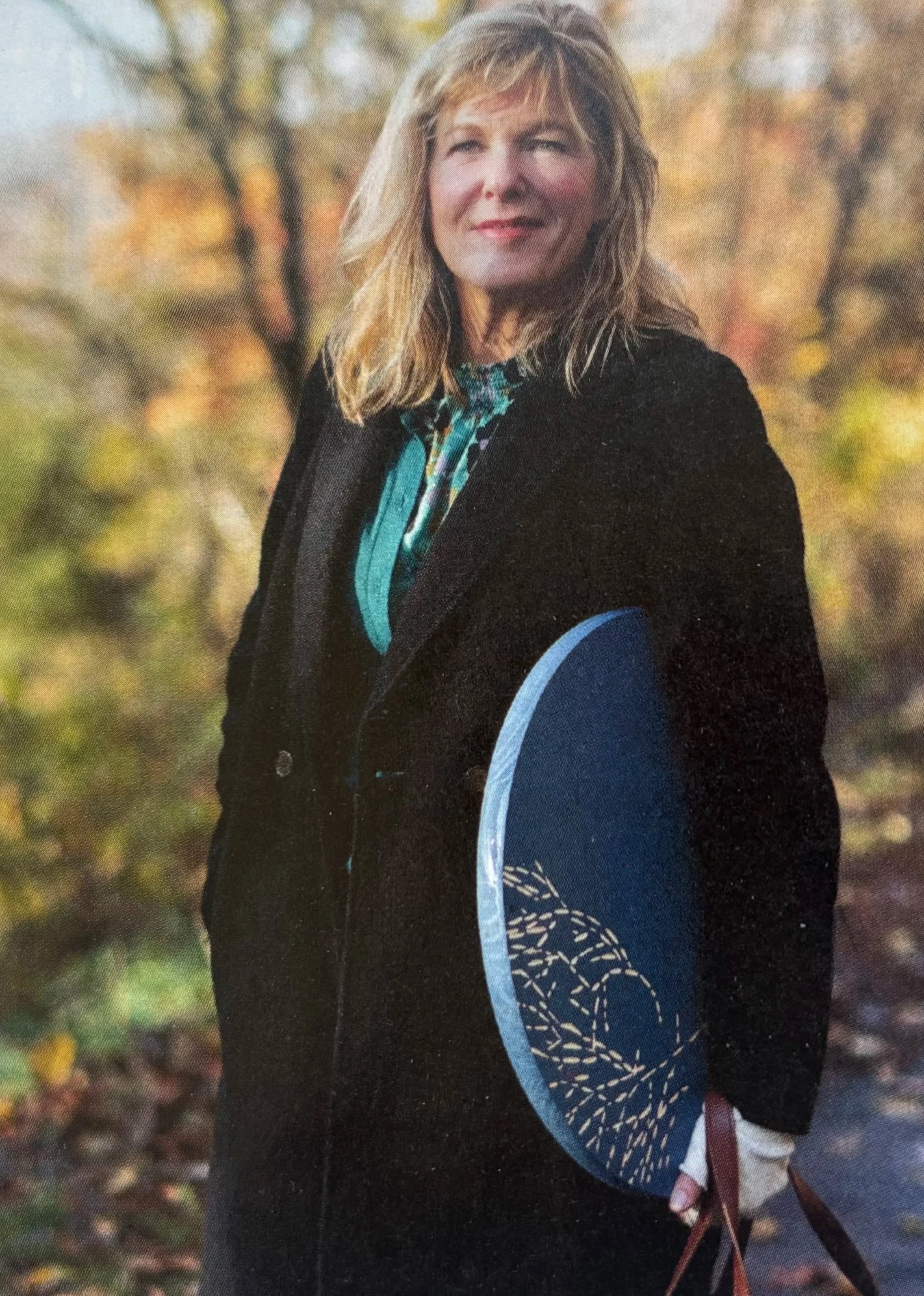
Growing up, she spent summers on her Norwegian grandparents' farm in rural Minnesota. Those early years etched a point of view that often surfaces in her work to this day. The harvest in Autumn would yield to frost; shadows lengthened, and fields once vibrant echoed with silence. The weight of worry soon lingers like snow on eaves. Yet in each barren branch, there would be a whisper of promise. A silent pact with the land, where even in despair, the seeds of hope remain buried deep. The barn, a steadfast sentinel, stood against the chill, each breadth a reminder of the fragile thread that wove potential into the fabric of toil.